What to Do If You Wake Up in the Middle of the Night

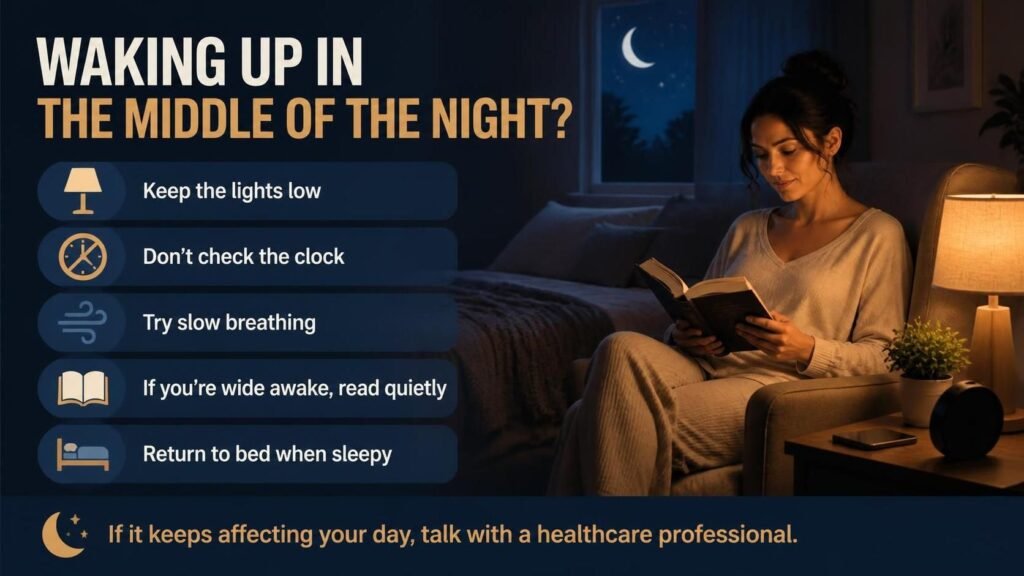
Waking up during the night is common. Brief awakenings can happen between sleep cycles, and you may not remember them in the morning. The difficulty arises when you stay awake, become frustrated, or find that nighttime waking is regularly affecting how you feel during the day.
The goal isn’t to force yourself to sleep. Instead, keep your body and mind calm, avoid habits that make you more alert, and give sleep a chance to return naturally.
What to do when you wake up
- Keep the lights low. Bright light can make you feel more alert. If you need to get up, use only enough light to move around safely.
- Avoid checking the time. Clock-watching can lead to worry about how much sleep you’re losing, making it harder to relax.
- Try a quiet relaxation technique. Breathe slowly, relax your muscles one group at a time, or gently focus on a peaceful image. If the technique starts to feel like a task, let it go.
- If you’re wide awake, get out of bed. If you feel alert or frustrated rather than sleepy, move to a quiet place and do something calm in dim light, such as reading a paper book. Return to bed when you feel sleepy again. You don’t need to time this exactly; use your level of alertness as a guide. This approach, called stimulus control, is a component of cognitive behavioral therapy for insomnia (CBT-I).
- Keep your usual wake-up time. Sleeping in to compensate can make it harder to maintain a regular sleep schedule. If you feel sleepy the next day, be cautious with driving or other activities that require alertness.
What to avoid
Try not to scroll on your phone, turn on bright lights, start working, or repeatedly check the clock. Avoid using alcohol as a sleep aid; although it may make you feel drowsy at first, it can disrupt sleep later in the night. If you take medication or supplements for sleep, use them only as directed by a healthcare professional.
Why might you be waking up?
Nighttime awakenings can have many causes, including stress, noise, temperature, an irregular sleep schedule, alcohol or caffeine, pain, needing to use the bathroom, or certain health conditions. Snoring, gasping, or pauses in breathing may be signs of a sleep-related breathing problem. A sleep diary—recording bedtimes, wake-ups, caffeine and alcohol use, and daytime energy—can help identify patterns to discuss with a clinician.
When to seek help
Consider contacting a healthcare professional if waking during the night happens often, continues for several weeks, or affects your mood, concentration, work, or safety. Seek advice sooner if you also have loud snoring or gasping, significant pain, or other concerning symptoms.
For persistent insomnia, CBT-I is a structured, evidence-based treatment and a first-line option. It addresses sleep-related behaviors and thoughts, including what to do when you’re awake during the night. A clinician can help determine whether it’s appropriate and whether another issue may be contributing.
The takeaway
If you wake up and can’t settle, keep things quiet and dim. Don’t watch the clock or try to force sleep. If you’re fully awake, leave bed for a calm activity and return when you feel sleepy. If the problem persists or affects your daily life, seek professional guidance.
This article is for informational purposes and isn’t a substitute for medical advice. If you have ongoing sleep concerns, talk with a healthcare professional.