Habits That Can Worsen Insomnia Without You Realizing It

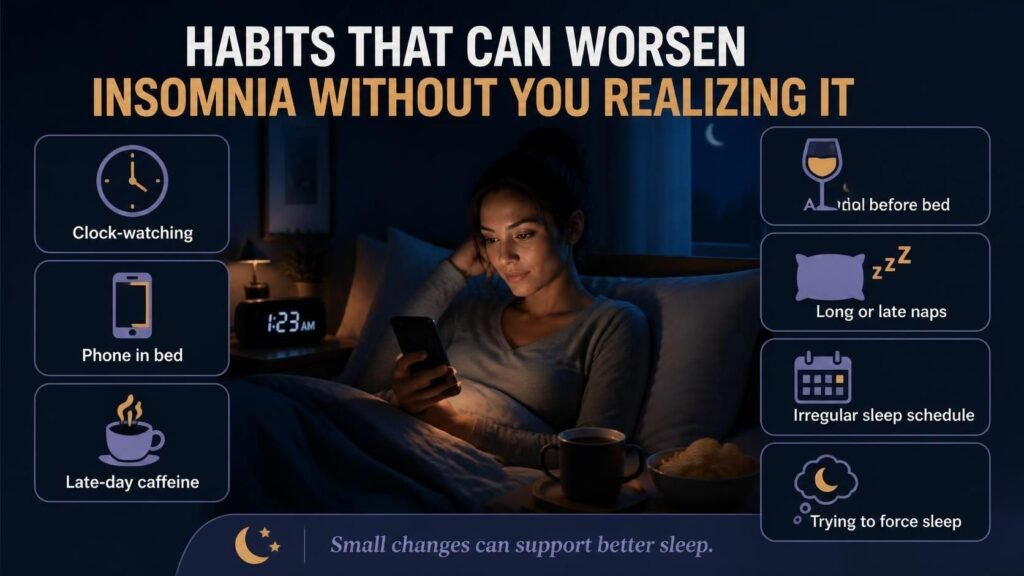
Insomnia isn’t always caused by one obvious problem. Sometimes, everyday habits—often adopted in an effort to get more rest—can make it harder to fall asleep or stay asleep. Spotting these patterns can help you make practical changes and understand when it may be time to seek professional support.
1. Spending too much time in bed trying to catch up
After a rough night, it’s tempting to go to bed much earlier, sleep in, or take a long nap. But spending more time in bed doesn’t necessarily mean you’ll sleep more. It can weaken the connection between your bed and sleep, especially if you spend long stretches awake there.
Try keeping a steady wake-up time and going to bed when you feel sleepy. If you’re frequently awake and frustrated in bed, get up for a quiet activity in dim light and return when you feel drowsy. In CBT-I, this kind of stimulus-control strategy helps reinforce the association between bed and sleep.
2. Watching the clock
Checking the time repeatedly can turn a brief awakening into a source of pressure: you start calculating how little sleep remains and worrying about the next day. Turn the clock away or keep your phone out of reach, and focus on resting rather than trying to work out how many hours you might get.
3. Using your phone in bed
Bright screens and engaging content can keep your attention active when you’re trying to wind down. Scrolling through social media, replying to messages, or reading stressful news in bed can also make the bed feel like a place for wakeful activity. Set your phone aside before bed, or use a relaxing, screen-free activity instead.
4. Having caffeine too late in the day
Coffee is an obvious source of caffeine, but tea, energy drinks, some sodas, chocolate, and certain medications can contain it too. Caffeine’s effects vary from person to person. If you have trouble sleeping, consider reducing your intake or avoiding it later in the day and see whether your sleep changes.
5. Relying on alcohol to fall asleep
Alcohol may make you feel drowsy at first, but it can disrupt sleep later in the night. If you notice frequent awakenings or less-restful sleep after drinking, try reducing alcohol near bedtime and track whether that helps.
6. Taking long or late naps
A nap can help with short-term tiredness, but long or late-afternoon naps may make it harder to feel sleepy at bedtime. If you nap, consider keeping it brief and earlier in the day. If insomnia is ongoing, discuss nap timing with a healthcare professional or CBT-I provider.
7. Keeping an inconsistent sleep schedule
Going to bed and waking up at very different times from one day to the next can make your sleep routine less predictable. A consistent wake-up time—including on weekends—can help support a steadier sleep-wake rhythm. If you need to adjust your schedule, gradual changes may be easier to maintain.
8. Trying to force sleep
Repeatedly telling yourself that you have to fall asleep can increase frustration and alertness. Sleep is not something you can command. Instead, use a calming routine, let go of clock-watching, and allow sleepiness to build. If you’re fully awake, step out of bed for a quiet activity and return when you feel sleepy.
9. Treating sleep hygiene as the whole solution
A comfortable bedroom, regular schedule, and calming bedtime routine can support sleep, but they may not be enough to resolve persistent insomnia on their own. Cognitive behavioral therapy for insomnia (CBT-I) is a structured treatment that addresses the thoughts and behaviors that can keep insomnia going. It is considered a first-line treatment for chronic insomnia.
How to identify your own patterns
Keep a simple sleep diary for a couple of weeks. Note your bedtime and wake-up time, nighttime awakenings, naps, caffeine and alcohol, and how rested you feel during the day. Look for patterns rather than judging individual nights; sleep naturally varies, and a diary can help you identify what may be affecting yours.
You don’t need to change everything at once. Choose one or two habits to adjust consistently, then observe how you feel.
When to seek professional help
Talk with a healthcare professional if sleep problems persist, affect your daily functioning, or leave you unusually sleepy during the day. It’s also worth seeking advice if you snore loudly, wake up gasping, or suspect pain, medication, or another health condition may be interfering with sleep. A clinician can help identify possible causes and discuss treatments such as CBT-I.
This article is for informational purposes only and isn’t a substitute for medical advice, diagnosis, or treatment. Don’t stop or change prescribed medication without consulting your healthcare professional.