What to Eat for Dinner to Sleep Better

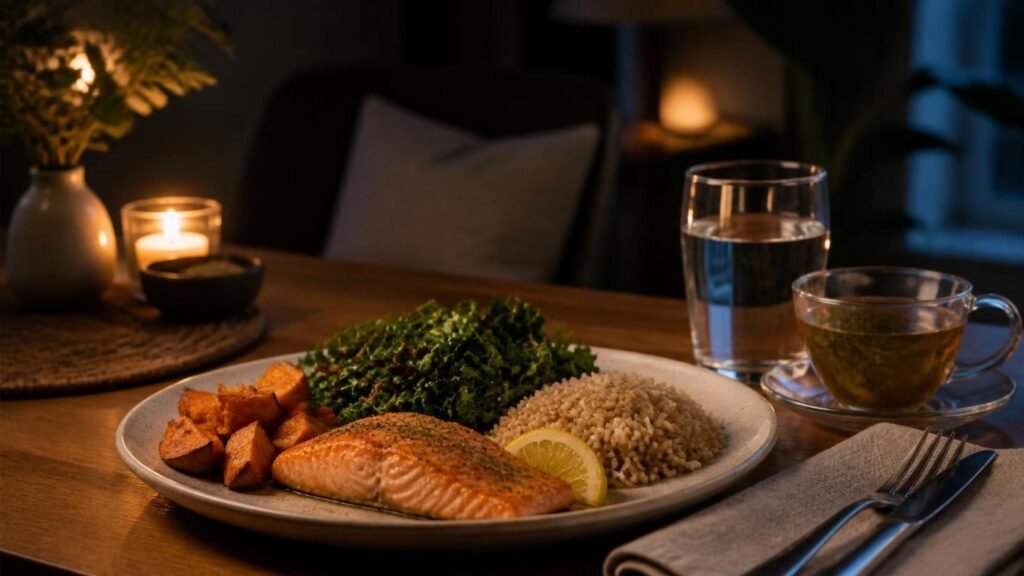
Image: The accompanying dinner image shows salmon, sweet potato, leafy greens, and brown rice—a balanced meal that can fit into a sleep-friendly evening routine.
Dinner can support restful sleep when it’s satisfying, balanced, and comfortable to digest. But no single food can guarantee a good night’s sleep or treat insomnia. What works best depends on your schedule, appetite, health, and how particular foods affect you.
Build a balanced dinner
A practical dinner can include vegetables, a source of protein, and a carbohydrate such as potatoes, brown rice, whole-grain bread, or quinoa. For example, you might serve baked fish with sweet potato and greens, or make a vegetable omelet with whole-grain toast.
Foods such as fish, eggs, tofu, beans, nuts, and dairy contain tryptophan, an amino acid involved in producing substances that help regulate sleep. That doesn’t mean eating a tryptophan-rich dinner will make you fall asleep quickly; think of these foods as part of a varied diet, not a sleep remedy.
Choose a dinner that feels comfortable
A very large or rich meal may leave you feeling uncomfortably full. If you experience heartburn or reflux at night, notice whether spicy, fried, acidic, or high-fat foods make it worse. When lying down soon after eating aggravates reflux, leaving a couple of hours between dinner and bed may help.
There’s no single dinner time that suits everyone. If you get home late, a simple meal is fine; you don’t need to skip dinner or go to bed hungry to improve your sleep.
Watch what you drink in the evening
Caffeine can linger for hours, and sensitivity varies. If you have trouble sleeping, consider limiting coffee, tea, energy drinks, cola, and chocolate later in the day. Alcohol can make some people feel sleepy at first, but it can disrupt sleep later in the night, so it’s not a reliable sleep aid.
Do you need a bedtime snack?
If you’re genuinely hungry, a small snack—such as yogurt with fruit, a banana with a little nut butter, or whole-grain crackers with cheese—may be more comfortable than going to bed hungry. Keep it modest, especially if eating late tends to trigger reflux or indigestion. A snack is optional; you don’t need a special food to sleep well.
An easy dinner idea
Try baked salmon, sweet potato, and leafy greens, with water or a caffeine-free drink. Adjust the portions and ingredients to your appetite and dietary needs. If you don’t eat fish, beans, tofu, eggs, or another protein you enjoy can work instead.
The takeaway
Aim for a balanced dinner that satisfies you without leaving you uncomfortably full. Pay attention to how caffeine, alcohol, meal size, and late-night eating affect your sleep. Food can be one part of a healthy sleep routine, but persistent insomnia may need a broader approach and professional guidance.
This article is for informational purposes only and does not replace advice from a healthcare professional. If sleep problems persist or you have a medical condition that affects your diet, consult a qualified clinician or registered dietitian.