The Medical Method to Boost Metabolism Without Going to the Gym
NEAT in Older Adults
From the age of 65 onward, the progressive loss of muscle mass and the slowing of metabolism are natural biological processes. However, the traditional medical recommendation to "exercise" often generates resistance or frustration among people who are not accustomed to sports training.
Physical activity medicine offers an evidence-based alternative: NEAT (Non-Exercise Activity Thermogenesis). This concept includes all the energy our body uses during everyday movements that are not part of planned exercise.
Increasing NEAT is the most sustainable medical strategy for improving cardiovascular health, controlling blood glucose levels, and optimizing body composition without fatigue or risk of injury.
Daily Clinical Activation Plan: Adaptable and Low Impact
This schedule distributes movement throughout the day to avoid prolonged sedentary behavior without overloading the joints.
Morning Period: Circulatory Activation
- Joint Mobility (5 minutes): Gentle, controlled movements of the neck, shoulders, hips, and ankles immediately after waking up to stimulate synovial fluid production in the joints.
- Light Walking (10–15 minutes): A comfortable-paced walk outdoors or around the home.
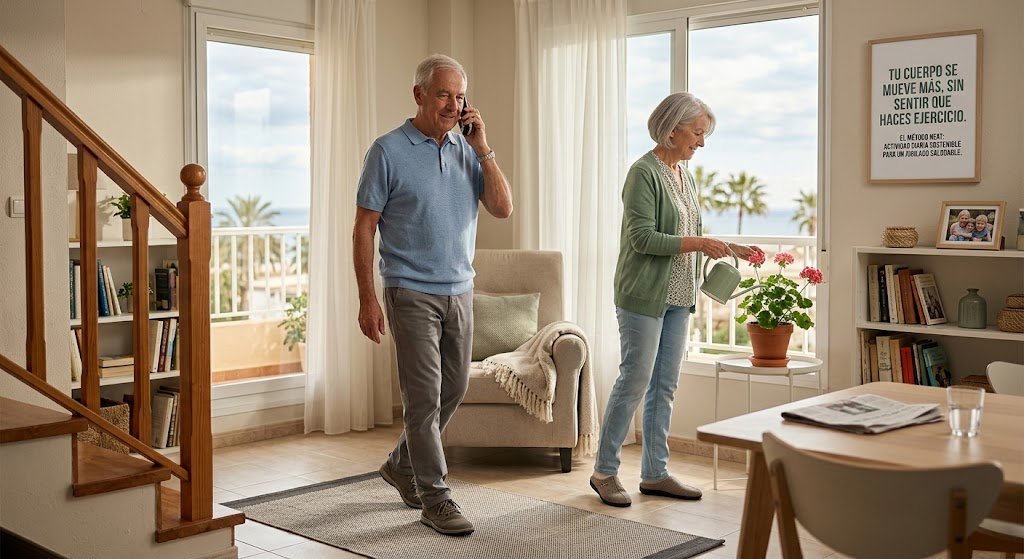
- Early Household Tasks: Making the bed, airing out the house, or watering plants activates the body's early metabolic response.
Mid-Morning: Breaking Sedentary Behavior
- Functional Movement: Make phone calls while standing or walking.
- Adapted Strength Training: Climb a flight of stairs with support if safe, or perform 8 to 10 repetitions of standing up and sitting down from a stable chair.
After Meals: Blood Sugar Control
- Digestive Walk (10 minutes): Walk at a gentle pace after the main meal of the day. This habit significantly reduces post-meal blood sugar spikes, making the pancreas' work easier.
Afternoon Period: Maintaining Caloric Expenditure
- Light Housework: Activities such as sweeping, tidying a room, or folding laundry increase calorie expenditure without joint impact.
- Going Outdoors: Take a walk outside or sit on a bench. This promotes exposure to sunlight, which is essential for vitamin D synthesis and circadian rhythm regulation.
Evening: Preparing for Rest
- Pre-Dinner Walk (10–15 minutes): Gentle movement indoors or outdoors while listening to the radio or music.
- Postural Hygiene and Relaxation: Perform 3 to 5 minutes of stretching or gentle mobility exercises before bedtime.
Medical Guidelines for Implementation
| Category | Clinical Recommendation | Direct Medical Benefit |
|---|---|---|
| Daily Volume | 4,000 to 6,000 accumulated steps | Reduced risk of cardiovascular events. |
| 60-Minute Rule | Stand up for 1–2 minutes every hour | Improved venous circulation and prevention of blood clots. |
| Positive Friction | Place frequently used items farther away | Encourages unconscious posture changes and movement. |
| Active Hydration | Keep your water glass in the kitchen | Promotes regular movement to refill it. |
Progression and Safety Criteria
For older adults, any increase above their current baseline activity level represents a metabolic improvement. There is no need to achieve a high step count from day one.
The primary medical goal is consistency without pain.
If pre-existing joint conditions or balance problems are present, all activities should be performed using safe support points and adapting duration according to individual tolerance.
Leave a Reply
Hi, this is a comment.
To get started with moderating, editing, and deleting comments, please visit the Comments screen in the dashboard.
Commenter avatars come from Gravatar.